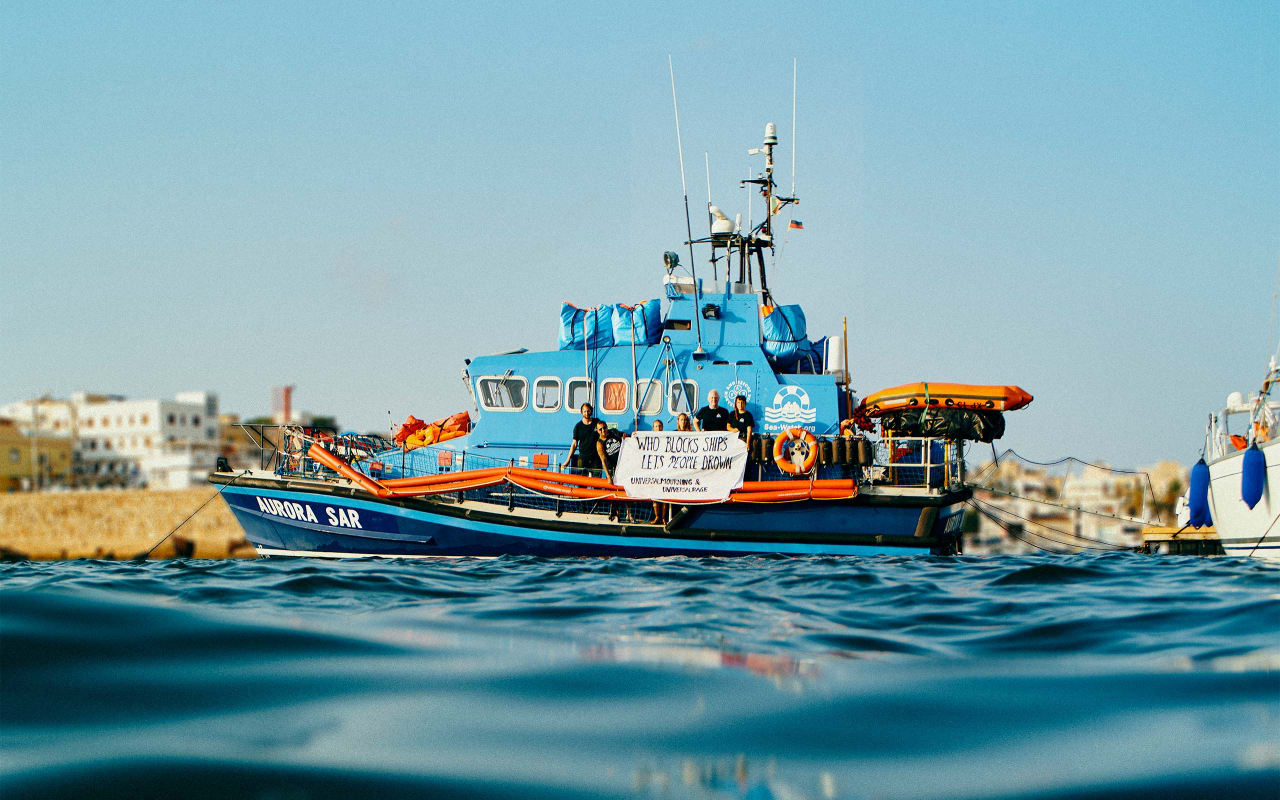
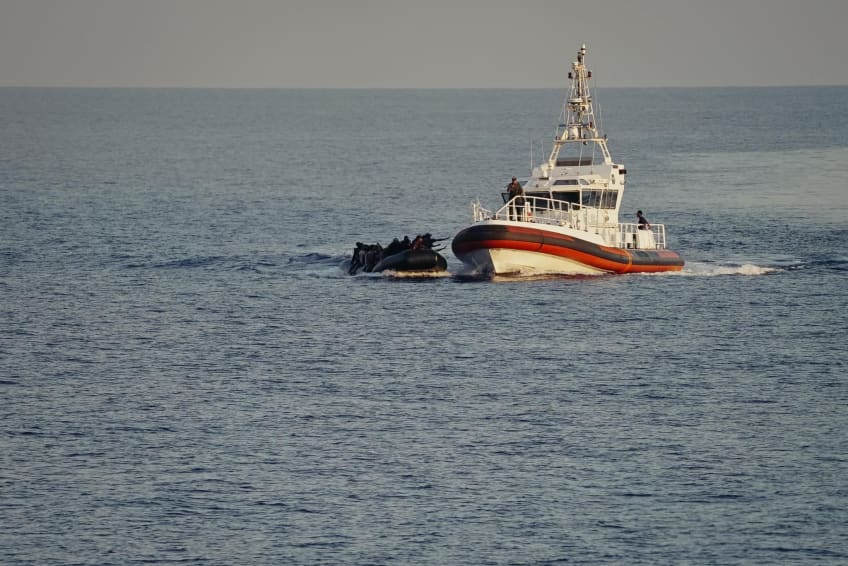
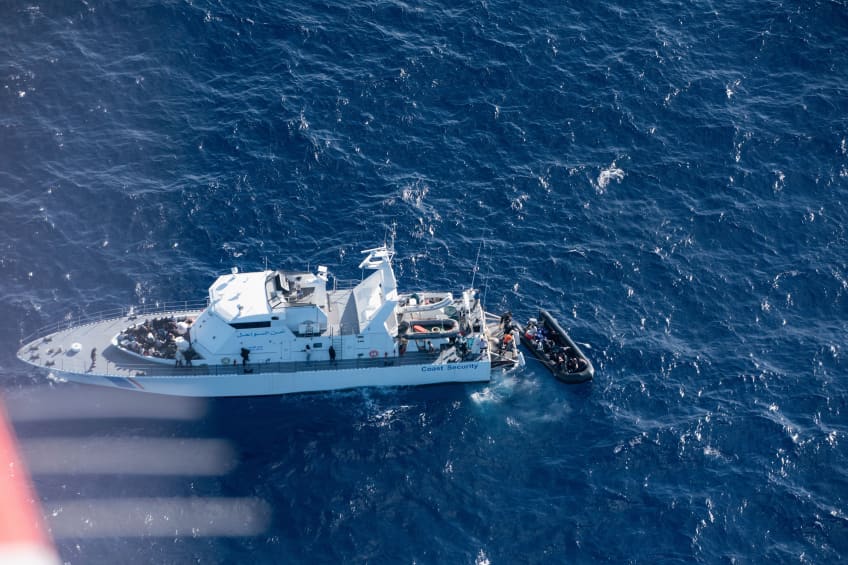
A new report by the civil sea rescue organisation Sea-Watch documents 107 violent incidents by Libyan militias against migrants and refugees, as well as European actors in the Mediterranean since 2016. More than 70 per cent of these incidents of extreme violence, 80 in total, were carried out by the so-called Libyan coastguard. The report is being published shortly before the renewal of Germany’s EUNAVFOR MED IRINI mandate. The current version of the mandate contains no clause excluding the training of the so-called Libyan Coast Guard by the German armed forces (Bundeswehr). On the contrary, the German government’s current motion (21/8821) puts a stronger focus on training, capacity building, and cooperation with Libyan actors, an approach previously negotiated at the EU level. Today, the German Bundestag holds its first debate on renewing the mandate for the participation of German soldiers and on the government’s motion.
The Sea-Watch report, entitled “Acts of Violence by the So-Called Libyan Coast Guard and Other Libyan Militias at Sea”, was first published in 2025. Sea-Watch is now publishing an updated version that includes the extreme acts of violence documented in 2026. The number of undocumented cases is believed to be considerably higher. The report records targeted gunfire, people in distress being forced overboard, deaths of people on the move, and (attempted) hijackings of rescue ships. It also records other acts of violence, such as deliberately dangerous manoeuvres and the pursuit of boats in distress, obstruction of rescue operations, threats against rescue crews, physical assaults on people in distress, and bodies being left behind at sea.
Key findings at a glance:
- With 26 documented incidents, 2026 is the most violent year in the Mediterranean since records began in 2016. Sea-Watch documented 2 shootings at people or rescue ships, 4 attempts at verbal intimidation, 5 cases in which people on the move were forced overboard, 6 unlawful orders for rescue ships to leave the scene, and 12 stalking incidents in which Libyan actors followed or harassed rescue ships over an extended period. Sea-Watch documented a total of 22 incidents of extreme violence in 2025, 14 in 2024, and 12 in 2023. Besides people on the move, the violence also affected civil sea rescue organisations, the Italian coastguard, and Italian fishermen.
- The so-called Libyan coastguard is by far the most dangerous actor in the Mediterranean. It is responsible for more than 70 per cent of the incidents recorded, at least 80 cases. The so-called Libyan coastguard is trained, equipped, and financed by the European Union and European member states.
- People on the move are by far the most affected by violence at sea. The report only records the most visible and direct forms of physical violence. These, however, take place within a system of violent pullbacks at sea. In 2025 alone, the International Organization for Migration recorded more than 27,000 people who were illegally intercepted while fleeing across the sea and abducted back to Libya.
Bérénice Gaudin, Advocacy Officer at Sea-Watch, comments:
“The so-called Libyan coastguard shoots at people, threatens rescue crews, and leaves bodies behind at sea. And Europe trains them. This is deadly violence paid for with European money. The German armed forces must never train human rights abusers!”
The new Sea-Watch report is being published on the morning of the first Bundestag debate on continuing Germany’s IRINI participation. The government’s motion contains no clause excluding the training of the so-called Libyan coastguard by the Bundeswehr, although such a clause was still in place in 2024. The government’s motion also includes the planned establishment of a maritime coordination centre in Benghazi, eastern Libya. The government in eastern Libya, the territory controlled by General Khalifa Haftar, is not internationally recognised. The German government is thereby politically backing a strategic realignment of the IRINI operation that was previously agreed at the EU level. The new mandate gives greater weight to training, capacity building, and cooperation with Libyan actors.
At the same time, the German draft mandate contains no effective human rights safeguards and no clear limits on cooperation with Libyan actors.
Sea-Watch calls for the exclusion clause on training the so-called Libyan Coast Guard to be reinstated, and for Germany not to take part in establishing a maritime rescue coordination centre in Benghazi.
The full report on acts of violence by the so-called Libyan Coast Guard and other Libyan militias since 2016 is available here.
Support our missions